Understanding Your Rights in Drunk Driving Accident Claims
By Judge Law Firm, LLC Editorial Team Updated 2026-08-30
Drunk driving crash claims in Minneapolis and St. Paul allow victims to pursue compensation from the impaired driver and, under Minnesota dram shop law, the bar or restaurant that served a visibly intoxicated patron. Contact Judge Law Firm, LLC directly to discuss your case.
Key Takeaways
- Judge Law Firm, LLC operates in Inver Grove Heights, Minnesota and handles drunk driving accident claims.
- Free consultations available with no fees charged until clients collect compensation from their cases.
- Minnesota courts require clear proof that drivers operated vehicles while impaired by alcohol or drugs.
- Client testimonials confirm experienced attorneys successfully represent accident victims through lengthy settlement negotiations.
What proof do you need to hold a drunk driver liable?
Minnesota courts demand solid evidence that the other driver operated a vehicle while impaired by alcohol, drugs, or other substances at the moment of the crash. A drunk driving accident lawyer serving Minneapolis clients gathers police reports, chemical test results, and witness statements to build that foundation. Blood alcohol readings and officer observations noted at the scene often carry the most weight in a Hennepin or Ramsey County case.
Impairment alone rarely wins a claim. Victims pursuing a DUI crash injury claim in St. Paul must also show the impaired driver’s negligence directly caused the collision and the resulting harm. That means connecting swerving, speeding, or delayed braking to the injuries suffered, not just proving intoxication existed.
How common are alcohol-related crashes in Minnesota?
They happen far more often than many families realize. Minnesota recorded 26,593 DUIs in 2024 alone, according to the state’s DWI Dashboard, and each one carried the potential for tragedy.
Why does driving while intoxicated increase danger for Twin Cities drivers?
Impaired driving raises the likelihood of crashes, injuries, and deaths across Minnesota roadways. Many of the 26,593 DUIs recorded in 2024 permanently altered victims’ lives, which is why a drunk driver liability attorney for the Twin Cities builds each case around documented impairment and clear causation evidence.
Can you sue the bar that served the drunk driver?
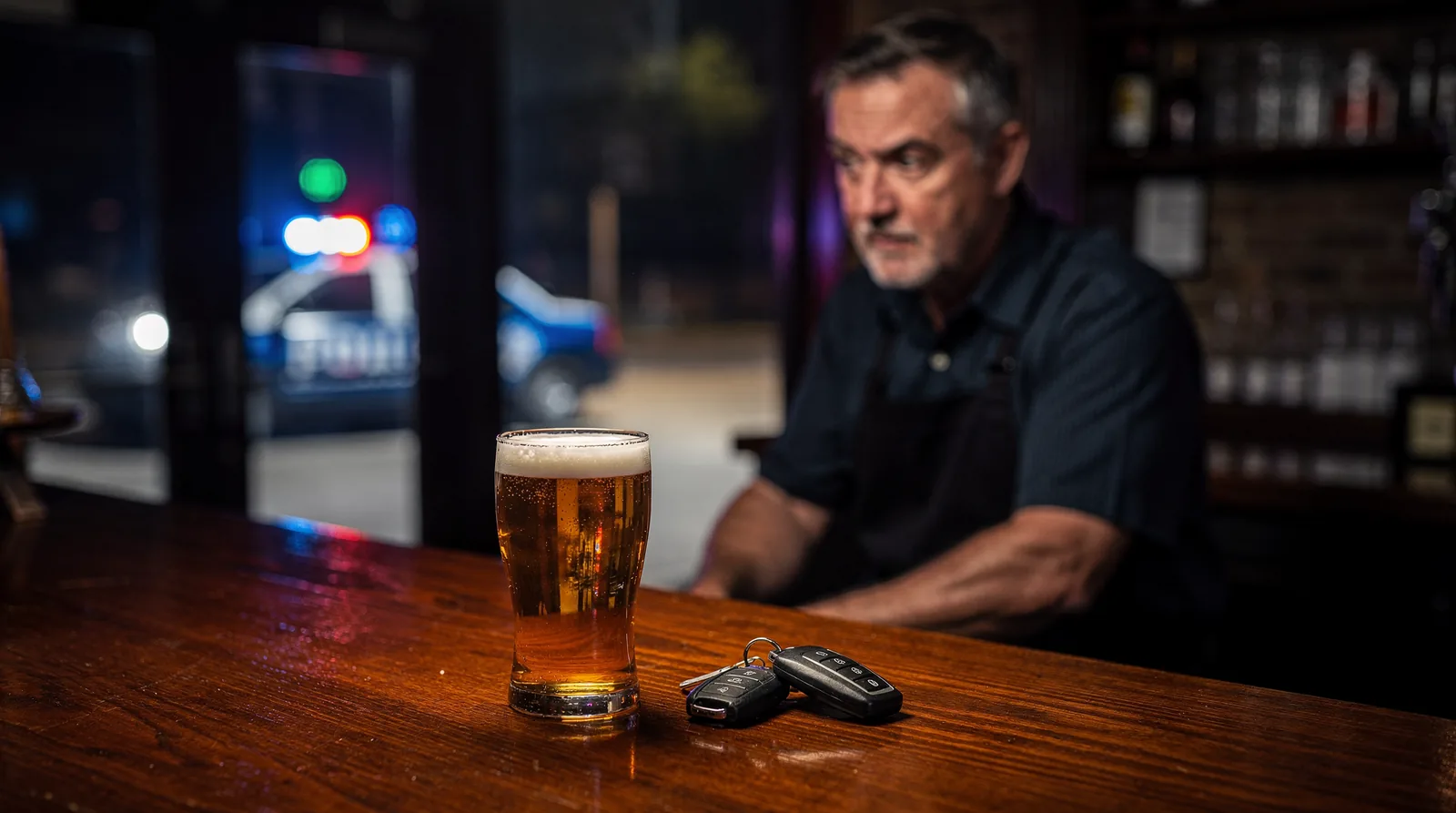
Yes. Minnesota’s dram shop law lets injury victims file a claim against a bar, restaurant, or liquor store that kept pouring drinks for a patron who was visibly intoxicated. For someone struck by an impaired driver leaving a Minneapolis nightclub or a St. Paul sports bar near Xcel Energy Center, that establishment can share responsibility for the crash alongside the driver.
A drunk driving accident lawyer-minneapolis-013 treats these claims as separate legal tracks that move fast. Evidence disappears quickly.
What evidence disappears the fastest?
Tabs, drink receipts, and surveillance footage from Twin Cities bars typically aren’t kept long. Once a venue’s retention window closes, proof of over-service can vanish before a case ever gets built. Acting within days, not months, protects the paper trail.
Winter conditions add another wrinkle. When bar close hits in January, roads across the metro are often already icy, and defense attorneys frequently argue the ice caused the crash rather than the alcohol. A dui crash injury claim-stpaul-013 has to untangle both factors, showing impairment contributed even when weather played a role.
Key steps in a liquor-liability claim include:
- Documenting the driver’s visible intoxication before the crash
- Preserving bar receipts, tabs, and camera footage immediately
- Separating weather-related arguments from impairment-based negligence
Both circumstances can be true, and that doesn’t erase the bar’s liability.

How do you file a DUI crash injury claim?
Filing a dui crash injury claim-stpaul-013 starts with a civil lawsuit separate from any criminal charges the driver faces. Minneapolis and St. Paul crash victims often assume the criminal case handles everything. It doesn’t.
Does the criminal DUI case pay for medical bills?
No. The criminal case against a drunk driver moves on its own track through the courts and never pays a victim’s medical expenses. Prosecutors pursue punishment, not compensation. A separate civil claim, brought by the injured person or family, is the only path to financial recovery for hospital bills, lost wages, and other losses.
What does a civil claim recover?
A civil claim filed by a drunk driving accident lawyer-minneapolis-013 can pursue compensation covering medical bills, funeral costs, and related damages for families across the Twin Cities metro. Steps typically include:
- Documenting the crash scene, police report, and any DWI arrest records
- Gathering medical records tied to the injury
- Identifying every liable party, since a drunk driver liability attorney-twin-cities-013 may pursue the driver and, in some cases, an establishment that over-served alcohol
- Filing suit before Minnesota’s deadlines expire
Judge Law Firm, LLC, based in Inver Grove Heights, MN, serves clients throughout Minneapolis, St. Paul, and the surrounding metro who need guidance on how to sue drunk driver mn-013 procedures after an alcohol-related crash-synonym-013.
1. Minnesota Civil Damages Act / Dram Shop Liability (Minn. Stat. �A7 340A.801)
Minnesota’s Civil Damages Act provides a critical legal avenue for victims injured in drunk driving accidents to hold third-party commercial establishments accountable. Under Minn. Stat. �A7 340A.801, bars, restaurants, or liquor stores can be held liable if they unlawfully serve alcohol to patrons who are clearly intoxicated or to minors, and those patrons subsequently cause injury or death due to intoxication.
This dram shop liability imposes civil responsibility beyond the driver by focusing on the establishments that fail to adhere to state alcohol regulations. To pursue such claims, victims must meet rigorous legal standards evidencing over-service or illegal provision of alcohol.
Statutory Written Notice Requirement (Minn. Stat. �A7 340A.802)
A unique feature of Minnesota dram shop claims is the strict statutory pre-litigation written notice that must be provided to the alcohol-serving establishment. Under Minn. Stat. �A7 340A.802, the victim or claimant’s attorney must send written notice to the establishment within 180 days of entering into an attorney-client relationship regarding the incident. Failure to comply with this deadline can bar a claimant from recovering against the establishment.
Two-Year Statute of Limitations
Timing is of the essence under Minnesota law. Dram shop actions must be filed within two years of the accident date as governed by Minn. Stat. �A7 340A.802. This limitation period aligns with the urgency of preserving evidence—such as receipts and surveillance footage—which frequently disappears quickly in the hospitality industry.
Because of these specialized procedural requirements and strict deadlines, retaining a knowledgeable drunk driving accident lawyer minneapolis 013 promptly is essential to properly navigate dram shop litigation and maximize recovery for victims.
2. Punitive Damages in Minnesota DWI Injury Claims (Minn. Stat. �A7 549.20)
Beyond compensatory damages for losses, Minnesota law allows for the possibility of punitive damages in drunk driving injury cases as a form of additional punishment and deterrence against egregious conduct. However, obtaining punitive damages requires meeting a high legal standard defined under Minn. Stat. �A7 549.20.
Deliberate Disregard Standard
To claim punitive damages, the injured party must prove the defendant’s conduct involved a “deliberate disregard for the rights or safety of others”. This objective standard is more stringent than ordinary negligence and often hinges on evidence indicating willful or reckless behavior putting others at significant risk.
In drunk driving cases, factors that may establish deliberate disregard include a high blood alcohol concentration (BAC) well over the legal limit, repeated prior DWI convictions showing a pattern of illegal driving while intoxicated, or evidence the driver was racing, excessively speeding, or flagrantly ignoring traffic laws.
Bifurcated Procedural Requirement
Minnesota courts follow a bifurcated process regarding punitive damages. Initially, complaint filings cannot request punitive damages until the plaintiff produces prima facie evidence of deliberate disregard. After this threshold is established, the party may file a motion to amend the complaint to include punitive damages claims.
This procedural safeguard prevents frivolous or unsupported punitive damages demands and requires strong evidence before escalating litigation stakes. A skilled drunk driver liability attorney twin cities 013 will carefully develop the evidentiary record to satisfy this legal burden.
3. Criminal Restitution vs. Civil Personal Injury Litigation
Victims of drunk driving crashes may be entitled to criminal restitution through offender sentencing and a separate civil personal injury lawsuit. Understanding the distinctions is critical for securing full recovery.
Limitations of Criminal Restitution
Criminal restitution ordered by courts compensates victims only for certain out-of-pocket expenses and is limited by the offender’s ability to pay. Restitution typically does not cover all medical costs, lost income, pain and suffering, or other damages. It primarily functions as a punitive and rehabilitative tool, not a comprehensive remedy.
Advantages of Civil Litigation
Civil lawsuits offer a broader recovery scope. Plaintiffs access insurance policies including auto liability coverage, umbrella policies, and comprehensive dram shop commercial coverage, which often far exceed an individual offender’s financial means. Civil claims also pursue noneconomic damages like pain, suffering, emotional distress, and loss of consortium.
Victims should not rely solely on criminal restitution but pursue parallel or subsequent civil claims through an experienced dui crash injury claim stpaul 013 attorney to optimize compensation.
4. Local Twin Cities Court Procedures & Filing Venues
Drunk driving accident claims in the Twin Cities metro are primarily litigated in two key district courts:
- Hennepin County District Court (4th Judicial District) serving Minneapolis and many suburbs
- Ramsey County District Court (2nd Judicial District) serving Saint Paul and surrounding communities
Upon filing suit, cases undergo standard civil litigation stages including pleadings, discovery, motions, mediation, settlement negotiations, and potentially trial.
Role of Local Law Enforcement Evidence
Critical to building or defending claims are investigations and evidence gathered by law enforcement agencies such as the Minneapolis Police Department (MPD), Saint Paul Police Department (SPPD), and the Minnesota State Patrol. Specialized crash reconstruction reports and well-documented BAC blood or breath testing records form the evidential backbone used by attorneys in both civil and criminal proceedings.
A drunk driving accident lawyer minneapolis 013 integrates these official records to establish liability and quantify damages effectively before and during litigation.
5. Comprehensive Practice Guides & Next Steps
For those affected by alcohol-related crashes seeking guidance on legal options, Claimants should explore the following key resources provided by Judge Law Firm, LLC and other expert sources:
- Comprehensive Personal Injury Services Guide: Detailed overview of personal injury claims procedures, damages, and litigation strategy tailored to Minnesota law.
- Auto Accident Lawyer in Twin Cities: Specialized counsel focusing on automobile collision claims, including drunk driving cases within Minneapolis-Saint Paul.
- Minnesota No-Fault PIP Car Accident Guide: Explanation of Minnesota’s Personal Injury Protection requirements and how they interface with civil litigation.
When dealing with complex alcohol related crash synonym 013 incidents, these guides help victims understand their rights, responsibilities, and the crucial timeline for action—including how to sue drunk driver mn 013 successfully.
FAQ
What proof establishes a drunk driver’s liability?
Police reports, chemical test results, and witness statements form the foundation. Blood alcohol readings and officer observations from the scene carry the most weight in Hennepin or Ramsey County cases.
Can victims sue the bar that served the drunk driver?
Yes, Minnesota’s dram shop law allows claims against a bar, restaurant, or liquor store that continued serving a visibly intoxicated patron. That establishment shares responsibility for the crash alongside the driver.
Why does evidence in dram shop claims disappear so quickly?
Tabs, drink receipts, and surveillance footage from Twin Cities bars aren’t kept long. Once a venue’s retention window closes, proof of over-service can vanish before a case gets built.
Conclusion
In closing, if you or a loved one suffered injuries in a drunk driving crash throughout the Twin Cities metro area, you deserve experienced legal representation committed to holding negligent drivers accountable. The Judge Law Firm stands ready to guide you through this challenging process with compassionate counsel and aggressive advocacy. Your recovery matters to us. We remain dedicated to securing the compensation you need to rebuild your life after such a traumatic event.